 By admin
The middle-of-the-night scratching inside the walls or a sudden trail of ants marching across the kitchen island can make any homeowner panic. In that moment, the human reflex is almost always the same: run to the local hardware store and grab the strongest-looking spray, trap, or bait on the shelf. Doing it yourself feels empowering. It gives you an immediate sense of control over your domain, and it seems like a great way to save a hard-earned dollar.
The trouble is that bugs and rodents have been surviving for millions of years, adapting to almost everything humans throw at them. While a grocery-store bug spray might take down a few visible ants on your counter, it rarely solves the underlying crisis. Most home remedies only scratch the surface of a much deeper, more complex ecological issue happening right beneath your floorboards.
This guide is designed to help you look past the marketing promises on consumer pest products. We will take a deep dive into the hidden mechanics of insect behavior, look at the biological reasons why retail treatments fall short, and explore the safety risks of home chemical applications. Most importantly, you will learn how to spot the exact moment a weekend project crosses the line into professional territory so you can protect your family and your property.
Understanding the Difference Between Repelling Pests and Eradicating Colonies
When you walk down the pest control aisle at a home improvement store, the colorful cans promise instant death to bugs. What they do not tell you is how those chemicals interact with the complex social structure of an insect colony. Most consumer-grade aerosol sprays rely on synthetic pyrethroids. These chemicals are highly repellent, meaning bugs can sense them from a distance and will actively avoid the treated area.
When you spray a line of ants on your kitchen baseboard, you certainly kill the insects you can see. However, you also leave a chemical barrier that alerts the rest of the colony hidden inside the wall. Instead of walking through the poison, the surviving ants panic. This panic triggers a biological survival mechanism known as “budding.”
During budding, the colony splits. The workers take eggs and secondary queens and scatter in opposite directions to establish multiple new colonies throughout your house. A single ant problem can quickly turn into three or four separate infestations because of a single aerosol can.
Consumer products also struggle because of public safety regulations. Over-the-counter formulas are highly diluted so that an untrained homeowner can use them without causing immediate self-harm. Because the active ingredients are weak, they lack residual longevity. They break down rapidly when exposed to light, air, and household dust, sometimes losing their effectiveness in just a matter of days.
This creates a never-ending cycle where you must spray week after week, exposing your family to unnecessary chemicals without ever reaching the nest. A professional pest control company utilizes non-repellent transfer technology. These heavy-duty products are completely undetectable to insects.
Ants or termites walk right through the treated zone, pick up the active ingredient on their bodies, and carry it back into the heart of the colony. Through grooming and sharing food, the poison spreads like a virus, knocking out the queen and the entire population. When you hire a licensed exterminator, you are not just paying for someone to squirt liquid around your baseboards. You are paying for an expert who understands insect biology and can deploy these slow-acting, colony-eliminating tools safely and effectively.
Safely Navigating Aerial and Underground Stinging Insect Hazards
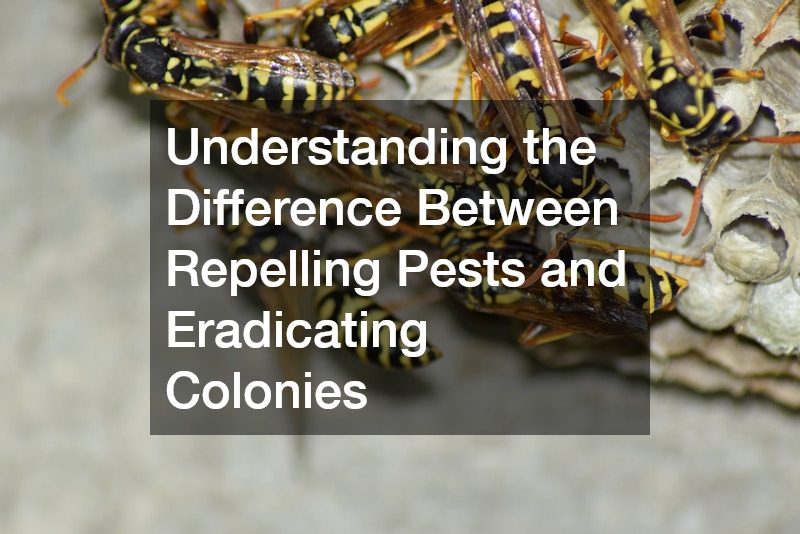
Dealing with stinging insects like wasps, hornets, and yellow jackets requires a completely different level of caution. A nest hanging from your roof line or buried in your lawn is not just a nuisance; it is a defensive military installation. Unlike honeybees, which generally die after a single sting, many common wasps can sting repeatedly without losing their stingers.
The primary reason DIY stinging insect treatments fail is a misunderstanding of insect defensive behavior. When a wasp or yellow jacket feels threatened, it releases an alarm pheromone into the air. This chemical scent acts as a biological siren, signaling every other insect in the nest to attack.
If you approach a nest during the day with a single can of retail freeze spray, you are entering a fight at a major disadvantage. The flying insects out foraging will return to find their home under attack, hitting you from behind while you are focused on the nest itself.
Homeowners also make disastrous mistakes when stinging insects build nests inside structural wall voids. If you see yellow jackets flying in and out of a small gap in your brick siding, the worst thing you can do is spray a retail foam into the hole or seal it with caulk.
When you block their primary exit, the thousands of insects inside will search for an alternative escape route. Because drywall is relatively soft, they will quickly chew through the paper and plaster, flooding into your living room or bedroom by the hundreds.
Amateur attempts at wasp nest removal often end in emergency room visits or major structural damage to the home. The risk escalates dramatically if anyone in the household has an undiagnosed allergy to insect venom, where a single sting can trigger anaphylactic shock.
Professional yellow jacket extermination services handle these hazards by utilizing specialized protective suits, extended delivery poles, and heavy-duty dust formulations that coat the inside of the void without trapping the insects inside. They ensure the entire population is neutralized before any entry points are permanently sealed.
How to Identify and Address Silent Property Destroyers Before Structural Failure
Some of the most devastating pests are the ones you never see. Wood-destroying organisms like subterranean termites cause billions of dollars in property damage every single year across the country. They live deep in the soil and construct microscopic mud tubes to climb up foundation walls, entering your home through cracks smaller than a business card.
Once inside, they eat the soft springwood inside your structural framing, leaving the outer painted surface completely intact. A home can be actively hollowed out from the inside for years without the owner noticing a single sign of trouble.
DIY approaches to these silent destroyers are almost completely useless. Buying a liquid barrier spray at a local store and pouring it around your foundation will not stop them. Subterranean termites tunnel deep beneath the frost line, far below the reach of a superficial surface spray.
Furthermore, retail bait stations often fail because homeowners do not know how to space them properly, or they fail to monitor them consistently. If a termite colony detects a dead worker near a low-quality bait station, they will simply abandon that specific feeding site and move ten feet down the wall to continue eating your home.
The math of delaying professional intervention for wood-destroying insects is grim. Spending a few hundred dollars on retail solutions over two or three years might make you feel like you are taking action, but meanwhile, the colony is growing. By the time you notice sagging floors, warped door frames, or bubbling paint, the structural timber may already be ruined.
True termite control requires specialized equipment, such as heavy-duty concrete drills to inject liquid barriers beneath garage slabs, and sub-slab injectors that place the chemical exactly where the soil meets the foundation footings.
Investing in certified termite exterminating services means deploying tools and commercial-grade liquids that bond with the soil for a decade, building an unbroken barrier that protects your largest financial asset from being systematically destroyed.
Mitigating Regional Climate Factors That Drive Pests Indoors
Pest pressures are not uniform across the country; they are heavily dictated by regional climate, soil types, and local vegetation. In areas with high humidity, dense clay soils, and expansive pine straw landscaping, insects find an absolute paradise. Long, hot summers combined with short, mild winters mean that insect breeding cycles almost never stop.
Instead of going dormant in the winter, many local pests simply seek shelter inside the warm crawlspaces and attics of nearby homes. This creates a relentless, year-round biological assault on residential properties.
When homeowners rely on generalized DIY advice found on internet forums or national blogs, they often miss the specific quirks of their local environment. For example, a treatment plan designed for an arid climate like Arizona will completely fail when applied to a home surrounded by dense woodland or coastal moisture.
Heavy clay soils can bind up certain consumer chemicals, rendering them completely useless within weeks, while regular afternoon thunderstorms can wash away cheap exterior granules before they ever have a chance to affect the target pests.
Managing these intense regional pressures requires an intimate understanding of the local ecosystem. A homeowner might spend hundreds of dollars swapping out different brands of retail sprays, unaware that the real culprit is a clogged gutter system keeping the roofline damp, or a woodpile leaning against the back deck.
Working with a local North Carolina pest control specialist ensures that your strategy matches the exact environmental pressures of your region.
An experienced North Carolina exterminator knows exactly which pests are swarming during specific months, how local weather patterns impact chemical longevity, and how to manipulate the exterior landscape to keep bugs from ever wanting to cross your threshold.
Standardizing Your Home Evaluation to Catch Hidden Infestations Early
To successfully protect your home, you must transition from a reactive mindset to a proactive one. This means conducting regular, systematic inspections of your property rather than waiting for a pest to cross your path. Catching a pest problem in its infancy can mean the difference between a simple, affordable treatment and a massive, invasive remediation project.
Every homeowner should establish a quarterly routine to evaluate the vulnerable areas of their property, keeping a sharp eye out for the subtle warning signs that indicate an infestation is growing behind the scenes.
- Foundation Inspections: Walk the entire exterior perimeter of your home every spring and fall. Look closely for pencil-thin mud tubes climbing up the brickwork or concrete foundation. Check for any areas where soil, mulch, or pine straw makes direct contact with your wooden siding or trim.
- Crawlspace and Basement Checks: Grab a flashlight and inspect your home’s lower levels. Look for sagging insulation, mysterious piles of fine sawdust known as frass, and insect wings discarded near windowsills or vents. These wings are a classic sign that a reproductive swarm has recently occurred.
- Attic and Roofline Reviews: Search for water stains or soft wood near the roof rafters. Moisture from a minor roof leak acts like a magnet for carpenter ants, wood-boring beetles, and rodents looking for a nesting site.
- Utility Penetrations: Examine the spots where plumbing pipes, electrical wires, and HVAC lines enter your home. Even a tiny gap around a pipe provides a wide-open highway for mice, roaches, and spiders.
If your inspections reveal any of these red flags, it is critical to understand your limitations. Continuing down the DIY path when you have found evidence of structural or widespread activity is a recipe for long-term failure.
Getting a comprehensive professional termite inspection is the most reliable way to verify the health of your home’s framing.
A licensed pest control service provider can use specialized tools like thermal imaging cameras to detect moisture zones and insect movement inside finished drywall without tearing your house apart, giving you a definitive diagnosis and an actionable plan for recovery.
The True Path to a Pest-Free Home

Taking care of a home is a journey that requires constant learning and a good dose of practical wisdom. There is absolutely nothing wrong with using simple traps or basic sanitation measures to handle minor, everyday issues like a stray fly or an occasional spider in the garage. Taking care of your home with your own two hands is a great feeling, and basic maintenance is an essential part of being a homeowner.
However, the real secret to successful property management is knowing exactly when to pass the torch to an expert. True, deeply rooted infestations are not a matter of a few stray bugs; they are complex biological challenges that require specialized education, restricted-use materials, and advanced equipment to solve safely. Trying to fight an army of termites, a massive underground yellow jacket nest, or an entrenched colony of wood-destroying ants with consumer-grade products usually ends up wasting your time and money while letting the underlying damage get worse.
By learning to recognize the limits of retail remedies and understanding the complex behaviors of these common household invaders, you can make smart, informed decisions that protect both your family and your finances. Investing in professional care isn’t a sign that your DIY efforts failed. Instead, it is a smart, proactive step that stops small problems from turning into incredibly expensive home repairs down the road. Treat your home as your most valuable asset, protect it with the right tools, and never hesitate to bring in the proper reinforcements when the safety and comfort of your living space are on the line.